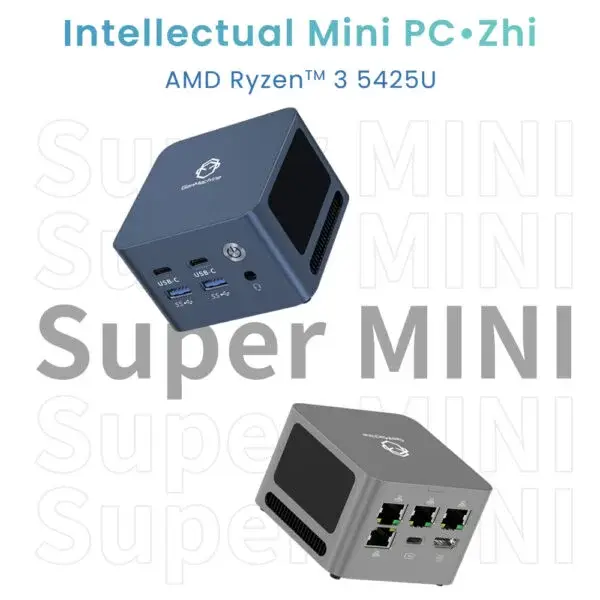
The mini PC market keeps expanding, with new brands appearing alongside established names. For buyers trying to navigate this crowded landscape, determining which mini PC manufacturer deserves trust becomes increasingly complicated. GenMachine is one name that surfaces in discussions — but what do we actually know about their reliability?
This question matters because mini PCs often serve important roles. Home offices, media centers, light server duties, digital signage — these compact machines handle real workloads. Choosing the wrong mini PC manufacturer means potential headaches down the road. Choosing wisely means years of dependable service.
What Makes a Mini PC Manufacturer Reliable?
Before examining GenMachine specifically, understanding reliability criteria helps frame the discussion. A dependable mini PC manufacturer typically demonstrates several characteristics:
- Consistent build quality across different product lines
- Thoughtful thermal design (compact doesn’t have to mean hot)
- Responsive customer support when issues arise
- Regular firmware and driver updates
- Clear warranty terms with actual follow-through
- Transparent communication about product specifications
Some manufacturers excel at hardware but neglect software support. Others offer great warranties but use questionable components. The truly reliable mini PC manufacturer balances all these factors reasonably well — not perfectly, but consistently.
GenMachine: Brand Overview
GenMachine positions itself as a mini PC manufacturer focused on delivering compact computing solutions for various use cases. Like many brands in this segment, they offer multiple product lines targeting different needs and budgets.
The company appears to understand that modern buyers want:
- Compact form factors that fit anywhere
- Sufficient performance for intended tasks
- Reasonable pricing without obvious corner-cutting
- Adequate connectivity options
- Some level of after-sales support
Whether GenMachine delivers on these expectations requires closer examination of actual products and user experiences.
Product Range and Positioning
GenMachine’s catalog typically includes several categories:
Entry-Level Systems
Basic mini PCs suitable for web browsing, document editing, media playback, and similar light tasks. These machines won’t win benchmark competitions, but that’s not their purpose. For simple computing needs, entry-level options from any mini PC manufacturer should handle everyday work adequately.
Mid-Range Productivity Machines
Systems with more capable processors, additional RAM, and faster storage options. This segment targets home office users, small businesses, and anyone needing reliable daily-driver performance. Most buyers probably fall into this category — wanting something capable without excessive cost.
Performance-Oriented Models
Higher-specification units featuring current-generation processors (Intel Core or AMD Ryzen variants). These target content creators, developers, and enthusiasts who need more processing headroom. Pricing increases accordingly, as expected.
Spotlight: GenMachine AMD Ryzen Mini PC
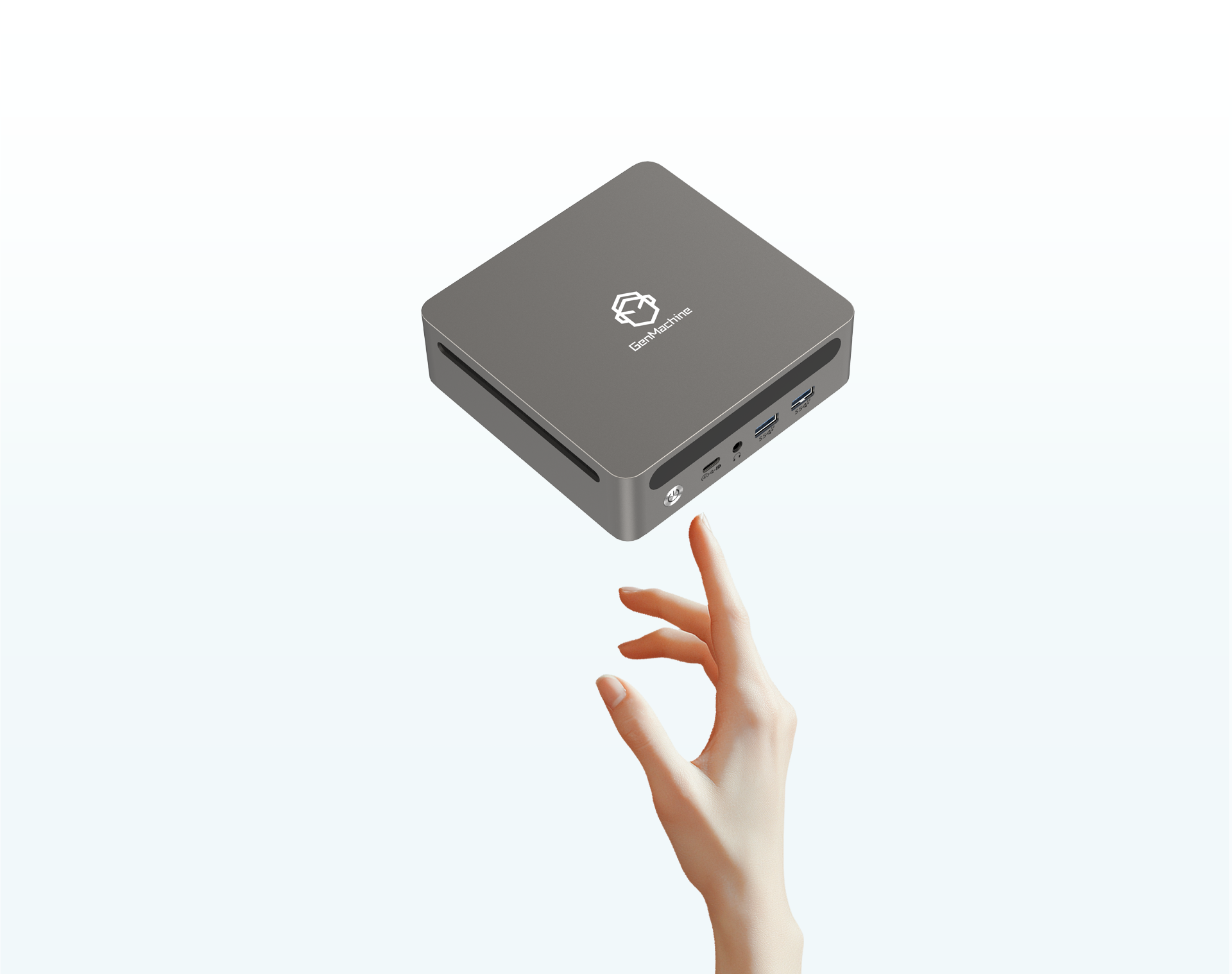
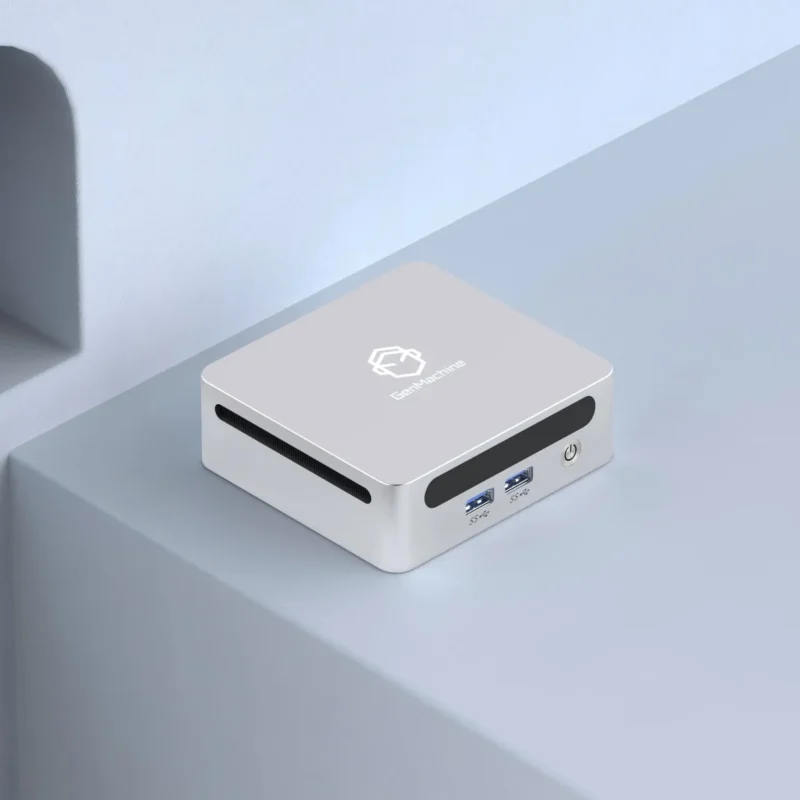
One model worth examining specifically is GenMachine’s AMD Ryzen-powered mini PC offering. AMD Ryzen processors have earned strong reputations for multi-threaded performance and power efficiency — making them natural fits for compact systems where thermal headroom matters.
GenMachine Ryzen 7 7840HS Configuration
This particular configuration demonstrates what GenMachine brings to the AMD Ryzen Mini PC segment:
| Specification | Details |
|---|---|
| Processor | AMD Ryzen 7 7840HS (8 cores, 16 threads) |
| Integrated Graphics | AMD Radeon 780M |
| RAM | Up to 64GB DDR5 (dual-channel) |
| Storage | M.2 NVMe SSD support (user upgradeable) |
| Connectivity | Wi-Fi 6E, Bluetooth 5.2, 2.5G Ethernet |
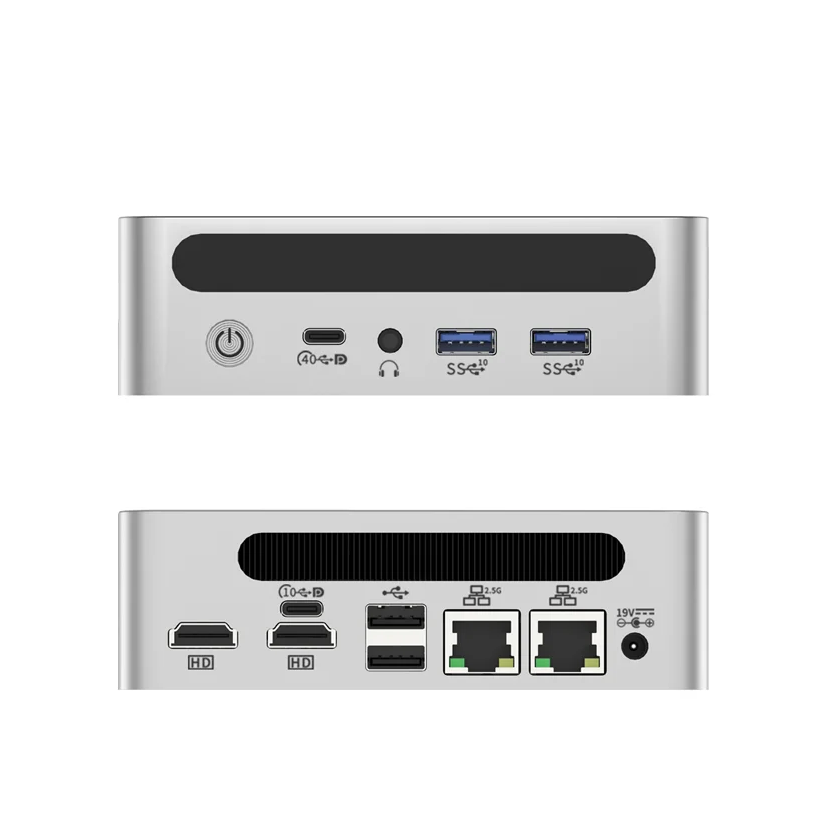
| Ports | USB4, USB 3.2, HDMI 2.1, DisplayPort |
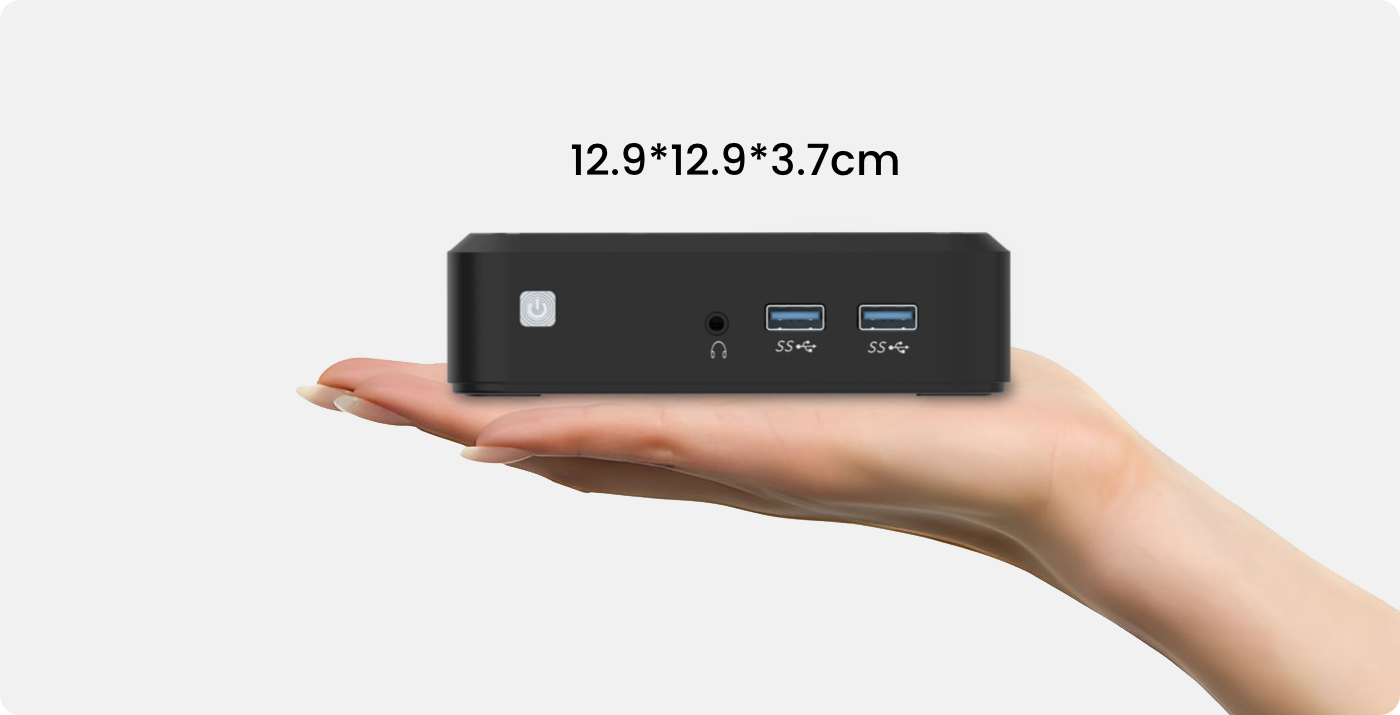
| Form Factor | Compact chassis under 0.5 liters |
The Ryzen 7 7840HS Mini PC represents AMD’s efficient yet powerful mobile processor lineup. In a mini PC context, this chip handles demanding workloads surprisingly well — video editing, software development, even light gaming thanks to the capable Radeon 780M integrated graphics.
What makes this AMD Ryzen Mini PC interesting from a reliability perspective:
• Thermal design seems adequate for sustained workloads (though fan noise increases under heavy load, as expected)
• Upgradeability with user-accessible RAM and storage slots
• Modern connectivity including USB4 and Wi-Fi 6E
• DDR5 memory support providing bandwidth for integrated graphics performance
User feedback on this specific model suggests generally positive experiences. The AMD Ryzen platform runs efficiently, the Radeon integrated graphics handle 4K displays and light gaming reasonably, and the overall build feels solid for the price point.
However, some observations warrant mention. A few users reported needing BIOS updates to resolve minor compatibility issues. Others noted that pushing the system hard in poorly ventilated spaces caused thermal throttling — though that’s physics more than manufacturer fault. The AMD Ryzen Mini PC segment generally impresses, and GenMachine’s implementation appears competent if not exceptional.
Build Quality Observations
Reports on GenMachine build quality vary somewhat, which honestly isn’t unusual for this market segment. Patterns that emerge from various sources suggest:
Positive observations:
- Chassis construction generally feels solid
- Port selection adequate for most use cases
- Internal layout reasonably organized
- Thermal solutions functional under normal loads
Areas of concern:
- Some variation between individual units (quality control could tighten)
- Fan noise noticeable under heavy sustained workloads
- Occasional reports of pre-installed software that nobody asked for
None of these concerns are unique to GenMachine as a mini PC manufacturer. Similar feedback appears for competitors in the same price bracket. The question becomes whether positives outweigh negatives for specific buyer needs.
Comparison Table: GenMachine vs Competitors
Lorem ipsum dolor sit amet, consectetur adipiscing elit. Ut elit tellus, luctus nec ullamcorper mattis, pulvinar dapibus leo.
| Factor | GenMachine | Intel NUC (ASUS) | Lenovo Tiny | MINISFORUM | Beelink |
|---|---|---|---|---|---|
| Price Range | Budget-Mid | Mid-High | High | Budget-Mid | Budget |
| Build Quality | Moderate | High | Very High | Moderate-High | Moderate |
| Support | Developing | Good | Excellent | Mixed | Mixed |
| Update Frequency | Periodic | Regular | Regular | Varies | Varies |
| Warranty | 1-2 years | 3 years | Up to 5 years | 1-2 years | 1-2 years |
| Best For | Budget-conscious buyers | Prosumers | Enterprise | Enthusiasts | Basic needs |
This comparison isn’t meant to declare winners or losers — different buyers have different priorities. Someone needing enterprise-grade reliability obviously looks toward Lenovo or HP. Someone wanting decent performance at lower cost might find GenMachine worth considering.
Customer Support Reality
Support quality often reveals a mini PC manufacturer’s true character. Hardware problems happen eventually — how companies respond matters tremendously.
GenMachine appears to offer standard support channels:
- Email-based customer service
- Website support resources (varying completeness)
- Warranty coverage for manufacturing defects
User experiences with support show typical patterns for this market tier:
What works reasonably well:
- Initial responses usually arrive within reasonable timeframes
- Basic troubleshooting guidance provided
- Replacement processes exist for defective units
What could improve:
- Response times during high-volume periods
- Technical depth of support staff varies
- Regional differences in support quality
For buyers accustomed to enterprise-level support from major brands, adjustment of expectations helps. Smaller mini PC manufacturers simply cannot maintain identical support infrastructure at significantly lower price points. That’s a tradeoff, not necessarily a dealbreaker.
Software and Firmware Considerations
This aspect often gets overlooked until problems appear. A responsible mini PC manufacturer provides:
- Working drivers for all included hardware
- BIOS/firmware updates addressing bugs or security issues
- Clear documentation for common procedures
- Compatibility information for operating systems
GenMachine’s track record here seems… adequate but not exceptional. Some models receive updates periodically, others less frequently. Documentation exists but completeness varies. This pattern mirrors many competitors, though established brands like Intel historically perform better in this area.
For technically comfortable buyers who can troubleshoot independently, this matters less. For those wanting everything to simply work without intervention, it’s worth considering.
Use Cases Where GenMachine Makes Sense
Based on available information, GenMachine products fit certain scenarios better than others:
Potentially good fits:
- Home office setups with standard productivity needs
- Media center or HTPC applications
- Digital signage or kiosk deployments
- Secondary computers for specific tasks
- Budget-conscious buyers comfortable with some DIY spirit
Potentially less ideal:
- Mission-critical business applications
- Environments requiring guaranteed uptime
- Users who absolutely cannot troubleshoot basic issues
- Situations where premium support justifies premium pricing
Every mini PC manufacturer has strengths and weaknesses. Matching products to appropriate use cases matters more than declaring any brand universally “best” or “worst.”
Buying Recommendations
For those considering GenMachine products, practical steps reduce risk:
- Research specific models— brand-level reliability means less than model-specific track records
- Read recent user reviews— patterns in feedback reveal consistent strengths or problems
- Purchase through reputable retailers— better return policies provide safety nets
- Test thoroughly during return windows— identify issues while returns remain possible
- Register warranty immediately— documentation helps if problems arise later
- Set appropriate expectations— budget pricing means budget-level support infrastructure
These recommendations apply to any mini PC manufacturer in this segment, honestly. They’re simply good practices for informed purchasing.
The Broader Context
Mini PC manufacturers exist on a spectrum. At one end, enterprise-focused brands like Lenovo and HP provide premium reliability with premium pricing. At the other end, unknown brands offer rock-bottom prices with questionable quality.
GenMachine occupies middle territory — aspiring toward reliability without (yet) matching established players. This positioning makes sense for their apparent target market. Whether they continue improving or stagnate remains to be seen.
The mini PC manufacturer landscape continues evolving rapidly. Brands that prioritize quality and support tend to build lasting reputations. Those cutting corners eventually face consequences in reviews and sales. Where GenMachine lands long-term depends on choices they make going forward.
Final Thoughts
Is GenMachine a reliable mini PC manufacturer? The honest answer involves nuance.
They appear legitimate — producing functional products, maintaining support channels, and competing in a crowded market. Build quality seems reasonable for the price segment. Support exists, even if imperfect. Products address real market needs.
Are they as reliable as Lenovo ThinkCentre or Intel NUC? Probably not — but direct comparison isn’t entirely fair given different price points and target audiences. Within their intended market, GenMachine represents a reasonable option for appropriate buyers.
Ultimately, reliability depends partly on the mini PC manufacturer and partly on buyer expectations. Understanding both sides of that equation leads to better purchasing decisions — regardless of which brand ultimately earns your business.If you want to know more about GenMachine, please read:Why Are Chinese Mini PCs So Cheap?