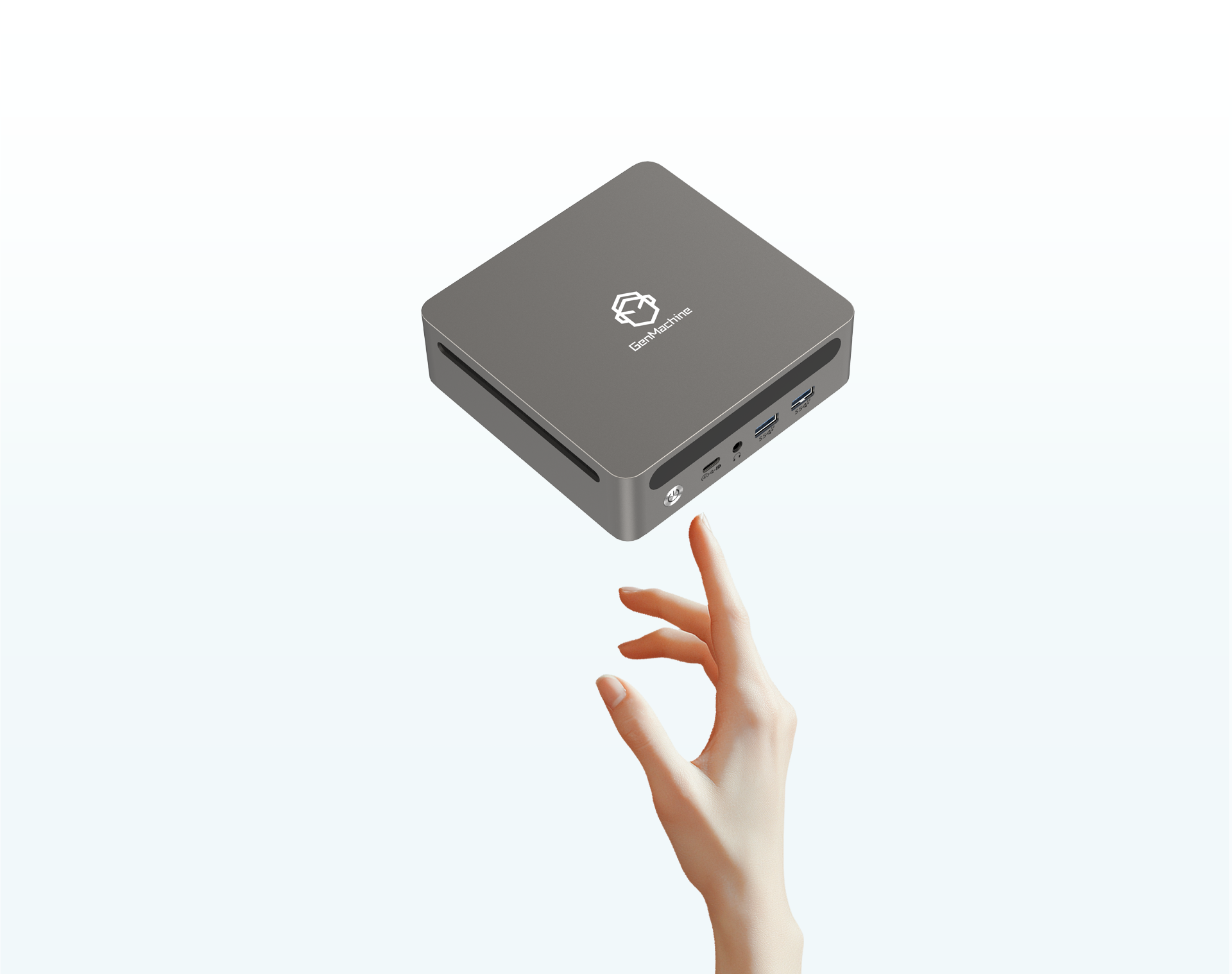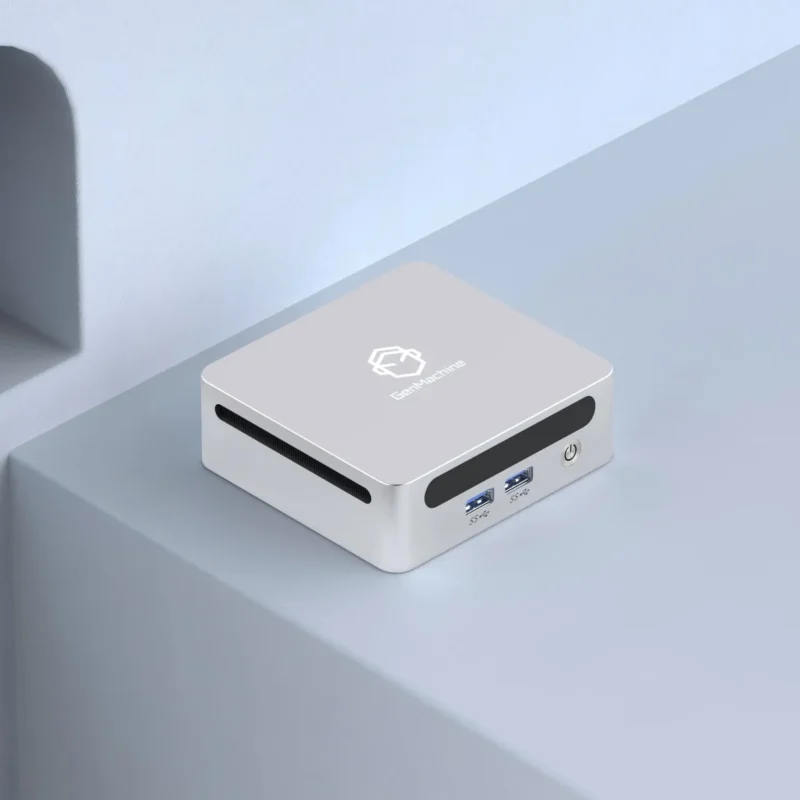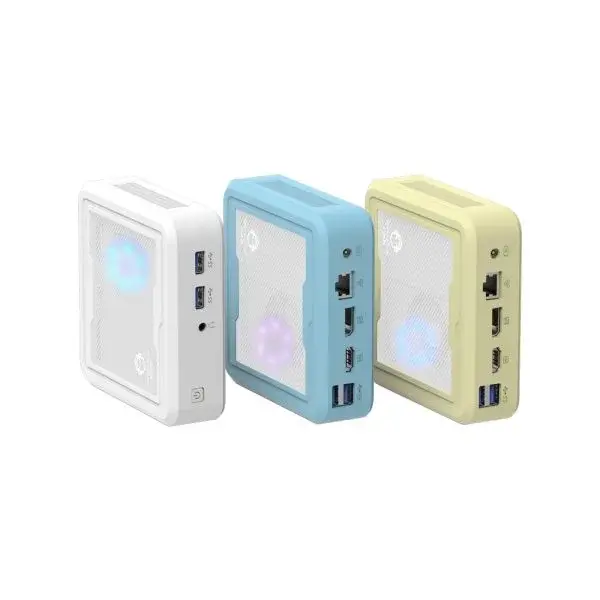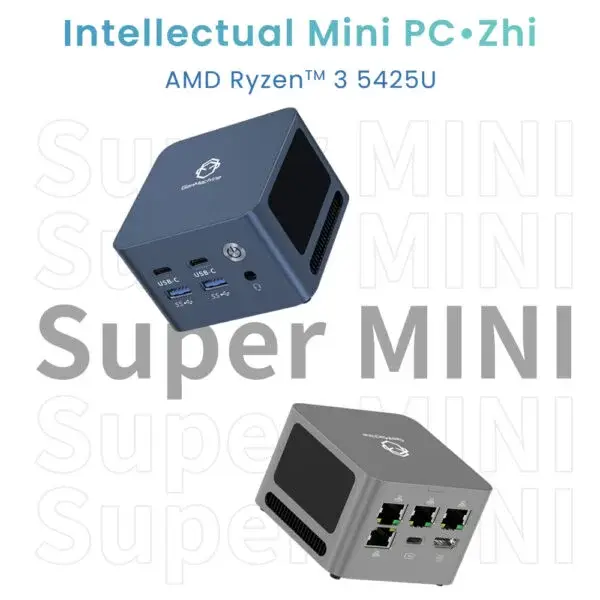
Mini PCs have quietly become serious contenders in the computing world. These compact machines — sometimes no larger than a sandwich — now handle tasks that once demanded full-sized towers. But here’s the reality: the CPU processor inside determines everything. Pick wrong, and the system disappoints. Pick right, and it feels like magic in a tiny box.
After examining the current market, one answer keeps emerging: AMD Ryzen processors offer the best overall package for mini PCs. The combination of raw performance, exceptional integrated graphics, and genuine value makes Ryzen hard to beat. Let’s dig into why — and which specific chips deserve attention.
The unique demands of mini PC processors
Mini PCs aren’t just smaller desktops. They face constraints that fundamentally change what matters in a CPU processor:
- Limited cooling capacity due to compact chassis
- Rarely any room for dedicated graphics cards
- Power delivery restrictions affecting sustained performance
- Need for quiet operation in living spaces and offices
These realities favor processors that do more with less. Brute force doesn’t work here — efficiency and integration matter enormously. And this is precisely where AMD Ryzen processors have established clear leadership.
Why AMD Ryzen stands above the competition
AMD has transformed its Ryzen lineup over several generations. What started as a competitive alternative has become, frankly, the default recommendation for most mini PC buyers. Several factors drive this dominance.
Unmatched integrated graphics performance
This is where AMD Ryzen truly separates itself from competitors. The integrated Radeon graphics in current Ryzen processors aren’t just “good enough” — they’re genuinely impressive.
The Ryzen 7 7840U features RDNA 3-based Radeon 780M graphics that rival discrete GPUs from just a few years back. Video editing accelerates noticeably. Photo processing feels snappy. Casual gaming actually works at reasonable settings. For a mini PC without a dedicated graphics card, this capability transforms what’s possible.
Intel’s Iris Xe graphics? Decent for basic tasks. But side-by-side with AMD’s Radeon offerings, the gap becomes obvious — especially in anything GPU-accelerated. Apple’s M-series handles graphics well too, but at significantly higher cost and with ecosystem limitations.
Efficient multi-core architecture
AMD’s Zen architecture delivers exceptional multi-threaded performance without excessive power consumption. In practical mini PC usage, this means:
- Smooth multitasking across dozens of browser tabs and applications
- Faster video rendering and encoding
- Responsive virtual machines alongside regular workloads
- Better sustained performance under extended loads
The efficiency matters doubly in mini PCs. Less power draw means less heat, which means less throttling, which means the CPU processor actually delivers its rated performance. It’s a virtuous cycle that AMD Ryzen handles better than alternatives.
Genuine value proposition
Performance-per-dollar favors AMD Ryzen significantly. A Ryzen 7 7840U-based mini PC typically costs hundreds less than a comparably performing Mac Mini, while offering more flexibility and upgradeability. Against Intel equivalents, AMD often wins on both performance and price simultaneously.
This value extends beyond purchase price. Better efficiency means lower electricity costs over time. Stronger integrated graphics eliminate any temptation to add external GPU solutions. The total cost of ownership genuinely favors Ryzen-based systems.

AMD Ryzen vs. the competition: A clear comparison
Let’s examine how AMD Ryzen stacks up against Intel and Apple — the two main alternatives in the mini PC CPU processor market.
AMD Ryzen vs. Intel: A decisive advantage
Intel dominated mini PCs for years. That era has ended. Current AMD Ryzen processors outperform Intel equivalents in most meaningful metrics:
| Aspect | AMD Ryzen | Intel Core |
|---|---|---|
| Integrated graphics | Radeon 780M — exceptional | Iris Xe — adequate |
| Multi-thread performance | Industry-leading | Competitive but trailing |
| Power efficiency | Excellent | Good, but less consistent |
| Gaming capability | Playable at medium settings | Struggles in most titles |
| Price-to-performance | Outstanding | Less compelling |
| GPU-accelerated tasks | Significant advantage | Noticeably slower |
Intel’s hybrid architecture (mixing P-cores and E-cores) brought improvements. The Core i5-1335U and i7-1365U aren’t bad processors. But “not bad” doesn’t win recommendations when AMD Ryzen offers genuinely superior alternatives at similar or lower prices.
For office productivity with zero graphics demands, Intel remains usable. The moment any GPU-bound task enters the picture — video calls, media editing, gaming, hardware-accelerated applications — AMD Ryzen pulls ahead decisively. And honestly, even pure CPU tasks often favor Ryzen’s multi-threaded strength.
The integrated graphics gap deserves emphasis. Intel’s Iris Xe handles 4K video playback and basic acceleration. AMD’s Radeon 780M does all that plus actual gaming, faster rendering, and smoother creative workflows. It’s not a small difference — it’s a generational leap.
AMD Ryzen vs. Apple Silicon: Better value and flexibility
Apple’s M-series chips generate deserved buzz. The efficiency metrics impress. But for mini PC buyers, AMD Ryzen often makes more practical sense:
| Aspect | AMD Ryzen | Apple M-series |
|---|---|---|
| Operating system | Windows, Linux — flexible | macOS only |
| Upgradeability | RAM/storage often upgradeable | Completely locked |
| Price | Competitive, multiple tiers | Premium pricing |
| Repairability | Standard components | Proprietary, expensive |
| Software compatibility | Virtually universal | Some limitations remain |
| Gaming support | Broad library access | Limited selection |
| Graphics performance | Excellent (780M) | Excellent (but locked ecosystem) |
Apple’s M2 and M3 chips perform beautifully within their ecosystem. But that ecosystem comes with strings attached — expensive strings. A Mac Mini with M2 Pro costs what two capable Ryzen-based mini PCs might cost. The performance difference doesn’t justify that gap for most users.
Flexibility matters too. AMD Ryzen mini PCs run Windows or Linux. Many allow RAM upgrades. Storage expansion is usually possible. Repairs use standard components. Apple offers none of this flexibility — and charges premium prices for the privilege.
For macOS-dependent workflows, Apple makes sense. For everyone else? AMD Ryzen delivers comparable or superior performance with dramatically better value and flexibility. It’s not really close when examined objectively.
Top AMD Ryzen processors for mini PCs
AMD offers several Ryzen chips well-suited for mini PC applications. Here’s how they break down:
| AMD Ryzen Processor | Cores/Threads | Integrated Graphics | TDP | Ideal Use Case |
|---|---|---|---|---|
| Ryzen 5 5600U | 6/12 | Radeon Vega 7 | 15W | Budget productivity |
| Ryzen 5 7530U | 6/12 | Radeon Graphics | 15W | Everyday computing |
| Ryzen 7 7735U | 8/16 | Radeon 680M | 15-28W | Creative multitasking |
| Ryzen 7 7840U | 8/16 | Radeon 780M (RDNA 3) | 15-28W | Performance sweet spot |
| Ryzen 9 7940HS | 8/16 | Radeon 780M (RDNA 3) | 35-54W | Maximum performance |
The Ryzen 7 7840U Mini PC Mdeserves particular attention. It represents the sweet spot for most users — enough cores for demanding workloads, RDNA 3 graphics for excellent GPU performance, and efficiency that works within mini PC thermal constraints. Many enthusiasts consider it the single best CPU processor for compact systems right now.
Matching AMD Ryzen to your needs
Different scenarios call for different chips. Some practical guidance:
- Home office and web browsing
- Ryzen 5 5600U or Ryzen 5 7530U
- More than enough for everyday tasks at accessible prices
- Productivity and heavy multitasking
- Ryzen 7 7735U
- Extra cores and threads handle complex workloads smoothly
- Content creation and video editing
- Ryzen 7 7840U
- Radeon 780M graphics accelerate rendering significantly
- Casual to moderate gaming
- Ryzen 7 7840U or Ryzen 9 7940HS
- Expect playable framerates at medium settings in many titles
- Maximum compact performance
- Ryzen 9 7940HS
- For users who push their systems hard and have adequate cooling
Beyond the CPU processor: Building the complete system
While AMD Ryzen forms the foundation, other components affect the experience:
- RAM: 16GB minimum recommended; 32GB for intensive workflows
- Storage: NVMe SSD standard; check expansion options
- Cooling: Quality thermal solutions let Ryzen chips sustain higher performance
- Connectivity: USB4 and Thunderbolt support expanding on newer models
A powerful AMD Ryzen CPU processor paired with inadequate RAM or poor cooling won’t deliver expected results. The whole system matters — but starting with the right processor makes everything else easier.
Recommended AMD Ryzen mini PCs
Several manufacturers have recognized AMD Ryzen’s strengths:
- MINISFORUM UM780 XTX — Ryzen 7 7840HS with excellent thermal design
- Beelink SER7 — Compact, affordable Ryzen 7 7840HS option
- GEEKOM A7 — Ryzen 9 7940HS for demanding users
- GMKtec NucBox K6 — Strong Ryzen performance at competitive pricing
These systems demonstrate what’s possible when capable AMD Ryzen processors meet thoughtful mini PC design.
Final thoughts
The question of which CPU processor works best in mini PCs has a clearer answer than it did a few years ago. AMD Ryzen has established meaningful advantages over both Intel and Apple alternatives — better integrated graphics, strong multi-threaded performance, excellent efficiency, and compelling value.
Intel remains usable for basic tasks but falls behind in GPU performance and overall value. Apple delivers excellent chips locked behind ecosystem constraints and premium pricing. AMD Ryzen hits the balance most mini PC buyers actually want: capable, flexible, and reasonably priced.
For anyone shopping today, the Ryzen 7 7840U represents the standout choice for most use cases. It handles productivity, creative work, and even gaming with surprising competence — all within the thermal and power constraints that define mini PCs.
The mini PC market has matured. So has AMD’s Ryzen lineup. The combination works remarkably well, and that’s precisely why Ryzen-based systems dominate recommendations in this space. It’s earned, not accidental. And for buyers seeking the best CPU processor for compact computing, AMD Ryzen is the answer that keeps proving itself.If you want to know more about Ryzen 7 7840U, please read Ryzen 7 7840HS Mini PCs for Multiple Use Cases.