What Makes a Cheap Mini Gaming PC Worth Buying
Mini PCs have come a long way. A few years back, the idea of gaming on something the size of a lunchbox felt like a joke — the kind of thing you’d see at a tech expo and politely nod at before walking off. Now it’s genuinely a conversation worth having, and not just among hardware enthusiasts. The market’s flooded with options, from barebones kits to fully configured units, and honestly, some of them are surprisingly capable while others are just… not. Performance gaps between similarly priced models can be wider than expected, sometimes shockingly so. Knowing the difference saves money, frustration, and that sinking feeling of unboxing something that can’t quite do what the listing promised.
The tricky part isn’t finding a cheap mini gaming PC. It’s finding one that doesn’t turn into a slideshow the moment a game gets demanding.
The CPU Is Where It Starts
Processor choice matters more in a compact form factor than people expect. There’s less room for error thermally, so a chip that runs hot under load will throttle — meaning the specs on the box won’t match what you actually get in-game.
AMD’s Ryzen 5 and Intel’s Core i5 (12th gen and newer) are generally solid starting points in the budget range. Anything older or lower-tier tends to bottleneck even modest GPU setups.
Integrated vs Dedicated GPU — The Real Tradeoff
This is where budget mini PCs split into two camps:
Models with integrated graphics (AMD Radeon 780M or Intel Arc being the better ones)
Models with a discrete GPU, usually something like an RTX 3050 or RX 6500M in laptop-grade form
Integrated graphics have gotten genuinely good for lighter titles and older games. For anything released in the last two or three years at medium-to-high settings, a discrete option is worth the extra spend — even if it pushes the price up a bit.
Key Specs to Compare Before You Buy
Not all spec sheets are honest about real-world gaming performance. Here’s a quick comparison of what to look for across different budget tiers:
| Budget Range | Recommended CPU | GPU Type | Expected FPS (1080p, medium) |
|---|---|---|---|
| Under $300 | Ryzen 5 5600U | Integrated (Vega/Radeon) | 30–50 FPS (older titles) |
| $300–$500 | Ryzen 7 7735HS / i5-12450H | Integrated (780M / Arc) | 50–80 FPS (esports/indie) |
| $500–$800 | Ryzen 7 7745HX / i7-13700H | Discrete (RTX 3050/4060) | 60–100+ FPS (most AAA) |
RAM and Storage — Don’t Overlook These
A lot of cheap mini gaming PCs ship with 8GB RAM, which is technically functional but increasingly tight for modern games. 16GB is the practical minimum now, and dual-channel configuration matters — single-channel RAM can cut GPU performance noticeably on integrated graphics setups.
Storage-wise:
Look for NVMe SSD, not SATA — load times are noticeably different
Check if there’s an expansion slot for adding storage later
Avoid models that only offer eMMC storage (common in the cheapest options)

Thermals and Cooling — The Hidden Performance Killer
This doesn’t get talked about enough. A mini PC with poor cooling will throttle under sustained load, which means your FPS drops after the first 10–15 minutes of gaming. Before buying, look for:
Reviews that include thermal testing, not just benchmark scores
Active cooling (fan-based) rather than passive
Mentions of sustained performance vs. peak performance
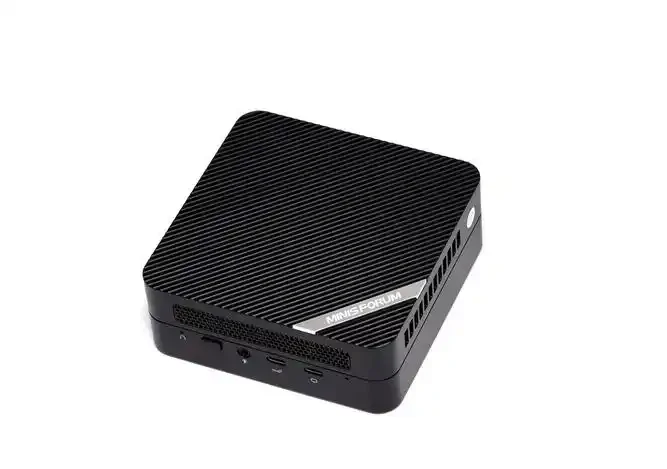
Some brands are better about this than others. MinisForum and Beelink have decent reputations in the budget space; some no-name options are more hit-or-miss.
Connectivity and Ports — Practical Stuff That Matters
Gaming setups need more than just processing power. Check that the unit has:
At least one USB-A 3.0 port for peripherals
HDMI 2.0 or DisplayPort for higher refresh rate monitors
Wi-Fi 6 if you’re not running ethernet
Enough USB ports to avoid needing a hub immediately
It sounds basic, but some compact designs cut corners here in ways that become annoying fast.
FAQ
Can a cheap mini gaming PC actually run modern games?
It depends on the game and settings. Esports titles, indie games, and older AAA games run well on mid-range mini PCs. Very recent open-world games at high settings are still a stretch for most budget options.
Is a mini PC better than a gaming laptop at the same price?
Mini PCs generally offer better thermals and upgradeability for the price, but laptops have a built-in display and portability. If the setup stays on a desk, mini PCs often give more value.
How long will a cheap mini gaming PC last for gaming?
With a decent CPU and 16GB RAM, realistically 3–5 years for most games at medium settings. Integrated GPU models will age out faster than discrete GPU ones.