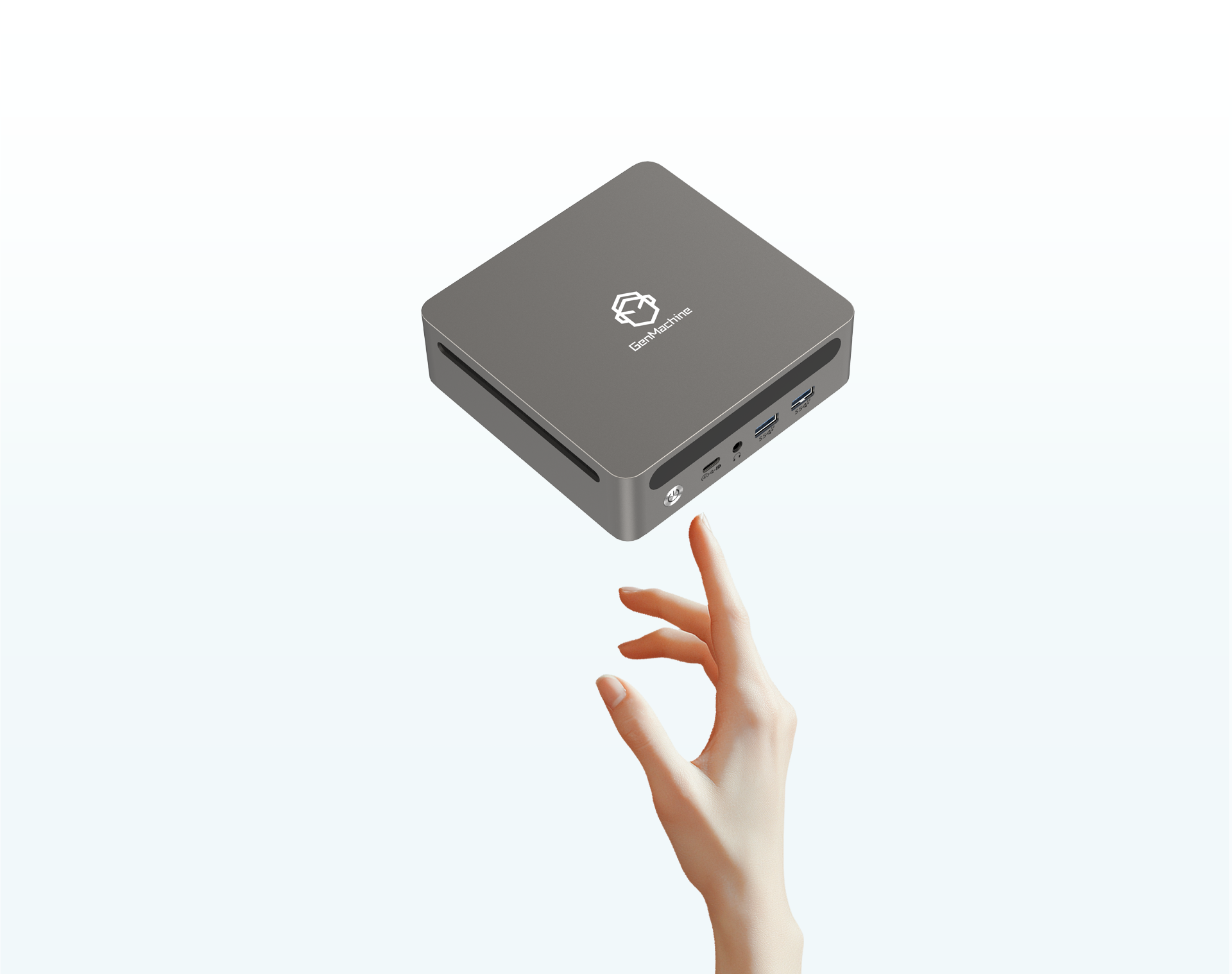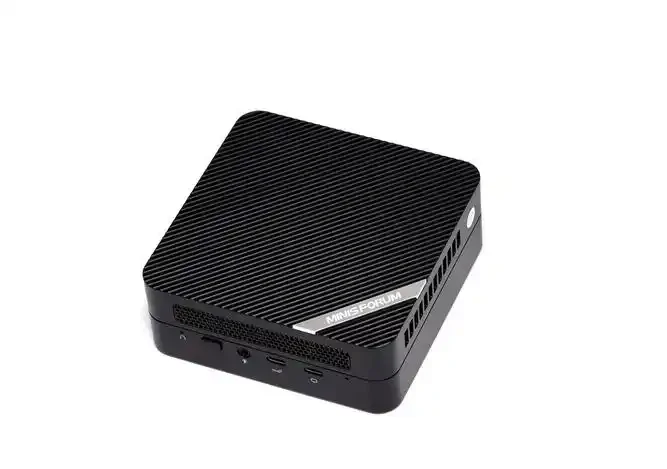
The days when a powerful computer required a massive, knee-bruising tower sitting under the desk are mostly behind us. It is quite interesting to observe how the trend has shifted toward minimalism, where efficiency is measured not by the size of the chassis but by how much power can be squeezed into a tiny footprint. Choosing a small form factor desktop has become a bit of a balancing act, one where the user must weigh the desire for a clean, open desk against the raw technical requirements of their daily tasks. It’s not always a straightforward path, and often, the “best” choice is the one that makes the fewest painful compromises.

Identifying the Core Needs of a Small Form Factor Desktop
When someone starts looking at these compact machines, the first thing that usually stands out is the sheer variety. Some are barely larger than a stack of coasters, while others look like a shrunken version of a traditional PC. Before diving into specs, it is worth considering what the machine will actually do all day. A small form factor desktop intended for simple office work—think spreadsheets, emails, and dozens of browser tabs—is a very different beast than one meant for 4K video editing or high-end gaming.
Thermal Reality and Noise
One thing that often surprises people who are new to the world of compact computing is the sound. Physics is a bit of a stubborn obstacle here. Because a small form factor desktop has less internal volume, air doesn’t move through it as freely as it does in a large tower. This means fans might have to spin faster, and therefore louder, to keep components cool. It is quite common to find a device that looks sleek and silent but ends up sounding like a tiny jet engine during a heavy workload. If the workspace needs to stay quiet, looking for models with larger, slower-spinning fans or more efficient cooling paths is usually the smarter move.
Assessing Graphic Capabilities
For many, the biggest hurdle is the GPU. If the intent is to play modern games or do heavy creative work, the limitations of a small form factor desktop become clear quite quickly. Most of these tiny units rely on integrated graphics. While integrated chips have come a long way, they still don’t hold a candle to a dedicated card. There are SFF (small form factor) builds that allow for dedicated GPUs, but they usually come with a jump in price and a slightly larger case size. It is a classic trade-off: do you want the smallest possible box, or do you actually need to render things quickly?
Comparing Small Form Factor Desktop Sizes and Layouts
| Type of Desktop | Typical Volume | Best For | Common Limitation |
|---|---|---|---|
Ultra-Compact (NUC style) | Under 1 Liter | Basic office, media streaming | No dedicated GPU options |
Small Form Factor (SFF) | 5 to 12 Liters | Professional work, light gaming | Limited drive space |
Mini-Tower (ITX) | 12 to 20 Liters | High-end gaming, workstation | Larger desk footprint |
It is also worth noting that the layout of the ports can be a dealbreaker. It seems like a small detail until one realizes all the USB ports are on the back and they need to plug in a thumb drive every twenty minutes. A well-designed small form factor desktop should have at least a couple of high-speed ports easily accessible on the front or side.
Connectivity and The Port Problem
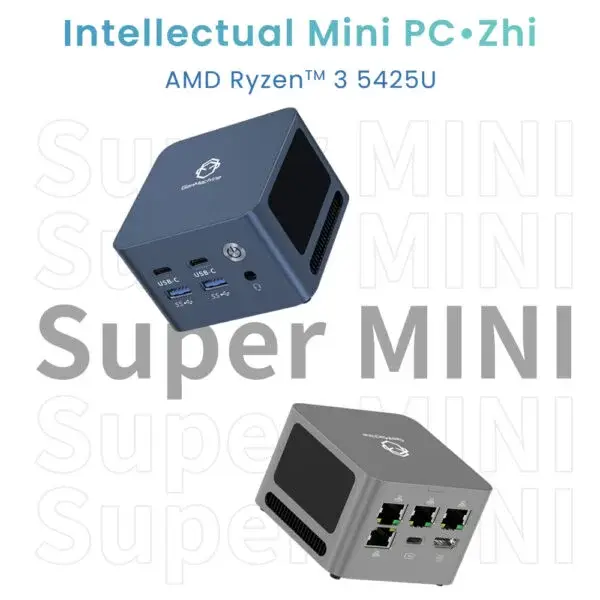
The “dongle life” is a real concern with the smallest of these machines. In the quest to shave off every possible millimeter, manufacturers often cut back on connectivity. One might find themselves with plenty of USB-C ports but no HDMI, or perhaps no Ethernet jack. For someone who relies on a stable, wired internet connection for video calls or large file transfers, having to buy an extra adapter just adds clutter to the desk that the small form factor desktop was supposed to clear up in the first place. It is always wise to count the peripherals currently in use—keyboard, mouse, webcam, printer—and make sure the new PC can actually talk to all of them.

Long-term Reliability for a Small Form Factor Desktop
One observation that comes up often in tech circles is that small computers like the 7330U AMD Mini PC can be harder to repair or upgrade. When parts are crammed together with surgical precision inside compact chassis designs, swapping out a failing power supply or adding more RAM to a 7330U AMD Mini PC can feel like a game of Operation. Some manufacturers solder the RAM or the storage directly onto the motherboard to save space on models such as the 7330U AMD Mini PC. This is perhaps the biggest “trap” for an unsuspecting buyer.
If the plan is to keep the computer for five or more years, it is probably best to avoid any small form factor desktop that is completely non-upgradeable. Being able to pop in a larger SSD or add another stick of memory can extend the life of a machine significantly, making the initial investment much more palatable.
To ensure a smooth transition to a compact setup, consider these steps:
Measure the physical space on the desk or behind the monitor (if using a VESA mount).
List the must-have connections (DisplayPort, SD card slots, etc.).
Check if the power brick is internal or a massive external “brick” that will sit on the floor.
Verify the warranty, especially regarding heat-related issues.
There are also a few things to avoid when setting up the new machine:
Placing the desktop in a drawer or a closed cabinet where heat can’t escape.
Forgetting to check the maximum resolution the HDMI port supports.
Overestimating the power of a “low-voltage” processor found in the tiniest models.
FAQ
Can a small form factor desktop handle gaming?
It depends on the specific model. While many are designed for office work, there is a dedicated segment of the SFF market that uses custom power supplies and riser cables to fit full-sized graphics cards. These are very capable but usually more expensive than a standard mid-tower gaming PC.
Are these computers prone to overheating?
They are generally designed to operate within safe thermal limits, but they do run warmer than larger PCs. As long as the vents aren’t blocked and the environment isn’t excessively hot, they perform reliably. However, performance might “throttle” or slow down slightly during extremely long, heavy tasks to keep temperatures in check.
Can I mount a small form factor desktop to the back of my monitor?
Many units come with VESA mount compatibility. This allows the computer to be screwed directly onto the back of a compatible monitor, effectively turning it into an all-in-one PC while keeping the desk completely clear. It’s a very popular setup for minimalist offices.