It is funny how quickly the conversation shifted from massive desktop towers to small, sleek boxes. Anyone walking into a modern production studio today might notice a distinct lack of giant computer cases roaring under the desks. Fast forward to now, finding the best mini PCs for video editing is entirely possible without sacrificing heavy computing power. The appeal of clearing off desk space while still being able to scrub through dense footage is undeniable.

Why the Best Mini PCs for Video Editing Actually Make Sense Now
Years ago, rendering a simple 1080p timeline on a tiny computer was basically a fast track to overheating the system. That is just not the case anymore. Finding the best mini PCs for video editing used to mean settling for compromised laptop components crammed into an unventilated plastic box. Now, thanks to wild thermal innovations and incredibly efficient processors from major chipmakers, these little machines are tearing through 4K footage without much complaint.
Creative professionals are often tired of sacrificing half their workspace to a noisy tower. There is a strong desire for something that sits quietly behind a monitor or tucked on a small shelf, yet still processes software like Premiere Pro, Final Cut, or DaVinci Resolve without stuttering every time a color grade is applied.
Specs That Matter for Timeline Performance
Not all small form factor computers are built for heavy rendering. A basic office unit will choke the moment multiple video layers are stacked together. Here is what is actually important when browsing the best mini PCs for video editing:
Processor (CPU): Multicore performance is everything here. High-end Ryzen 7 or 9 chips, Intel Core i7 or i9, and Apple M-series silicon are the standard targets.
Graphics (GPU): Integrated graphics have gotten vastly better, but having strong graphical architecture (like Radeon 780M or unified media engines) makes scrubbing through footage way smoother.
RAM Capacity: 32GB is pretty much the floor for comfortable high-resolution work, while 64GB provides a much safer buffer for heavy motion graphics.
Port Selection: Thunderbolt 4 or USB4 is absolutely necessary for connecting fast external media drives.
Top Contenders: The Best Mini PCs for Video Editing on the Market
The hardware market moves fast, but a few specific machines consistently show up on editors’ desks. It is always interesting to see the split between macOS and Windows platforms in this space, as both offer wildly different approaches to power efficiency and cooling setups.
| Brand & Model | Processor | Memory Limit | Standout Feature for Creators |
|---|---|---|---|
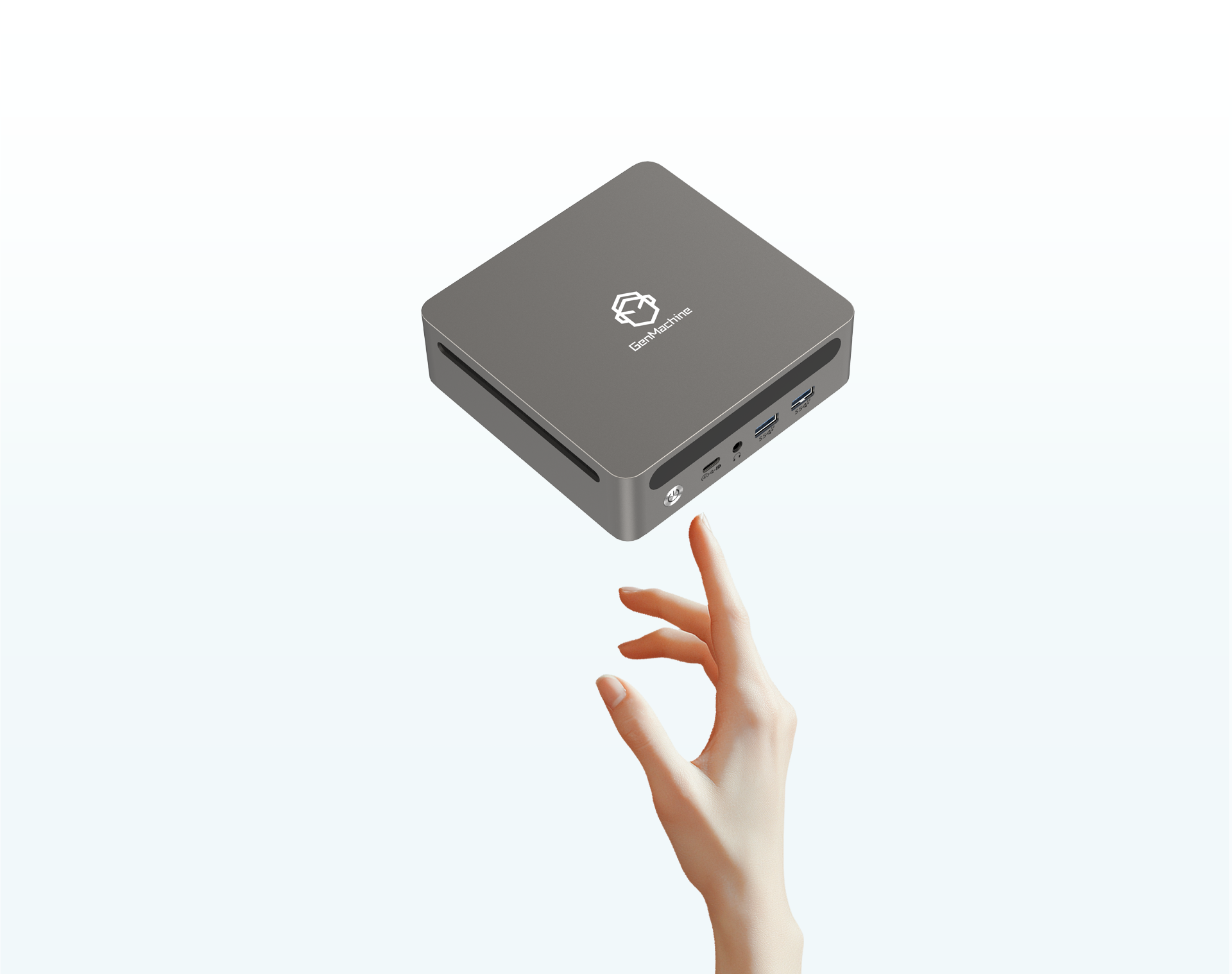
Genmachine AMD Ryzen 9 | Ryzen 9 7940HS | Up to 64GB | Exceptional value and strong integrated graphics |
Mac Studio (M2 Max) | Apple M2 Max | Up to 96GB | Insane ProRes encoding speeds and unified memory |
Mac Mini (M2 Pro) | Apple M2 Pro | Up to 32GB | Completely silent under most rendering loads |
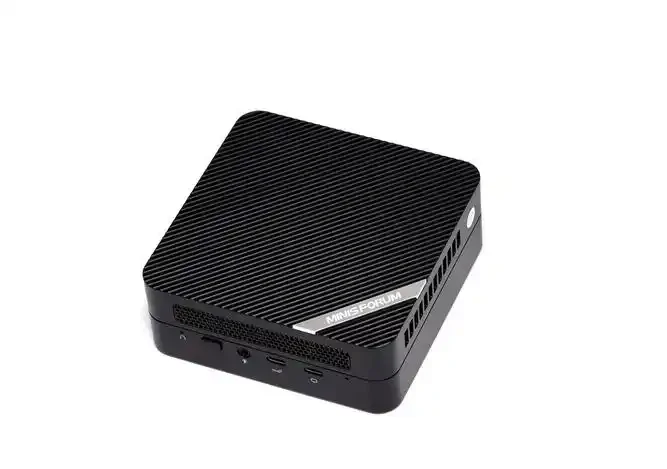
Minisforum HX99G | Ryzen 9 + RX 6600M | Up to 64GB | Dedicated GPU for heavier grading tasks |
Intel NUC 12 Enthusiast | Core i7 + Arc A770M | Up to 64GB | Hardware AV1 encoding support |
The Apple Silicon Factor vs Windows
It is hard to discuss this topic without acknowledging what happened when Apple introduced M-series chips. Their media engines are specifically optimized for common video codecs, making them incredibly popular. But Windows alternatives hold their own incredibly well. Devices like the Genmachine model listed above provide tremendous value, especially for users who need open software compatibility or simply prefer running DaVinci Resolve within a Windows environment.

Thermal Realities of the Best Mini PCs for Video Editing
Fixing the Storage Bottleneck
One of the most common issues observed with compact editing setups is running out of fast storage space. Since there is rarely physical room for multiple bulky internal hard drives, a typical compact workflow looks a bit different than traditional setups.
Install the operating system and the main editing software on the primary internal Gen 4 NVMe SSD.
Keep active project files and media cache on a secondary internal NVMe drive, assuming the computer has a secondary slot available.
Offload all completed projects, archives, and heavy raw B-roll to external Thunderbolt RAID enclosures or high-speed network-attached storage (NAS) systems.
FAQ
Do you absolutely need a dedicated graphics card for video editing?
Not strictly, though it helps immensely with certain tasks. Modern integrated graphics can handle basic to moderate 4K editing just fine. Heavy color grading, intense 3D effects, or complex noise reduction really demand a dedicated GPU to avoid sluggishness.
Are the best mini PCs for video editing better than premium laptops?
Generally, they offer a slightly better price-to-performance ratio. Because they do not have to power a built-in display or run off a restrictive battery, compact desktops can sometimes sustain higher power limits for longer periods than similarly specced laptops, leading to marginally faster export times.
Is 16GB of RAM enough for software like Premiere Pro?
It is functional for 1080p, but attempting to edit heavy 4K timelines with multiple adjustment layers on 16GB usually results in annoying system slowdowns. Stepping up to 32GB is the widely observed sweet spot where memory pressure stops being a constant headache during a creative session.